Why modernising existing trains is smarter than building new ones
Every day, millions of passengers step aboard NS double-decker trains without giving a second thought to what keeps them running safely. Behind the familiar carriages and sliding doors lies an intricate structure of components that, after 15 years of intensive use, need to be renewed. Not replaced. Renewed.
Because sometimes, the most sustainable choice is to improve what already exists.
Rebuilding from the inside out
When Nederlandse Spoorwegen (NS) decided to modernise its VIRM 2/3 double-decker fleet, the challenge was clear: upgrade hundreds of trains to extend their lifetime by decades, without compromising safety, precision, or efficiency. From 2019 Aalberts took full ownership of the aluminium interior solution.
From extrusion to CNC machining, bending, engraving, surface treatment, and final assembly: every step takes place under one roof. That level of vertical integration is not just efficient. It is essential when the components in question sit at the heart of a train's structural integrity.
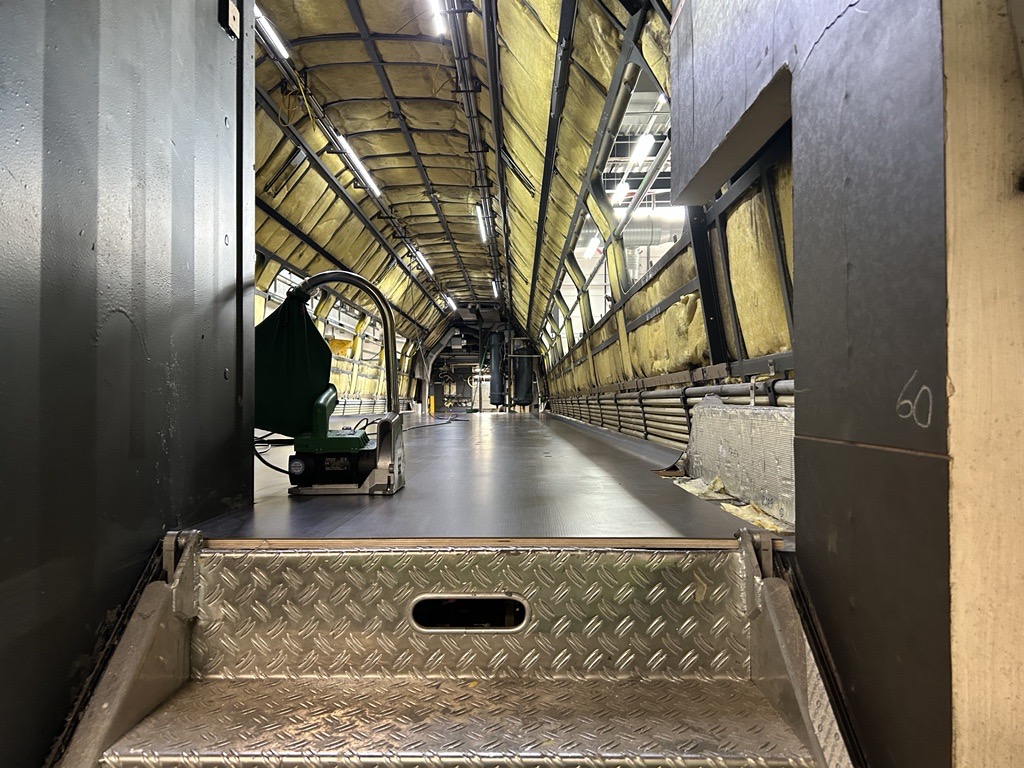
For the VIRM 2/3 programme alone, Aalberts produced and delivered 8,350 floor profile kits. Lightweight, durable aluminium components that sit largely beneath the floor but are critical to the long-term strength and safety of every carriage. Each train moves through fourteen workstations at NedTrain, with these kits integrated seamlessly into the refurbishment process.
The most sustainable train is the one already on the tracks, if you have the expertise to make it last.
Less waste, longer life
Modernising an existing fleet rather than building new trains from scratch has a profound impact on sustainability. Materials are reused. Manufacturing waste is minimised. And because Aalberts controls every step of production in-house, the environmental footprint of the entire process can be calculated and shared with customers like NS, giving them clear insights into their ecological performance. Also it adds another perspective to it: Good formability and precision enable unlimited design freedom and custom design options, resulting in less waste.
It is a model that challenges the assumption that progress always means building something new. With the renewal, trains can run another 15 years.
By controlling every step in-house, Aalberts can tell NS exactly what the carbon footprint of their refurbishment looks like. Down to the last component.
A partnership built for the long run
For NS, the collaboration with Aalberts means more than a technical upgrade. It means a stable, long-term partner with proven expertise in precision engineering, sustainable manufacturing, and the specific demands of rail infrastructure.
For the passengers who travel on these trains every day, it means something simpler: a journey that is just as safe, reliable, and comfortable as the day the carriage first left the factory. Only now, it has decades more to go.
Facts and figures
- Aalberts contributes to 35% production cost savings for NS when renewing the train instead of building a new train
- Aalberts contributes to approximately 40–60% reduction in CO₂ emissions f or NS, compared to new construction
- The billets used are made out of up to 95% recycled aluminium (secondary aluminium)
Contact us if you want to know more about this article
Mattijs Planken
strategy, marketing & corporate development