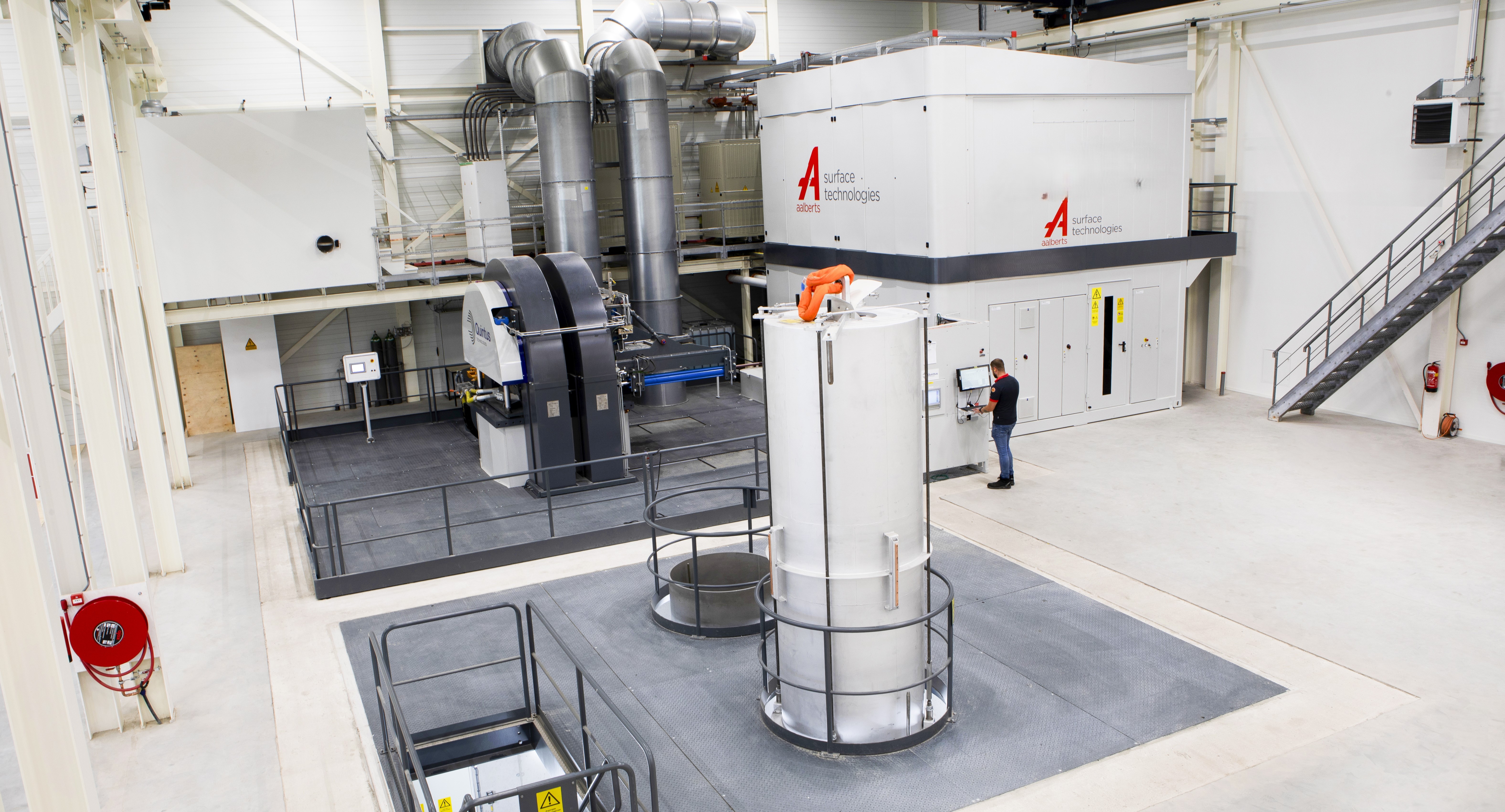
Meet the machine that makes the world's most critical components
Some components simply cannot afford to fail. The parts inside a jet engine, a medical implant, or an advanced energy system operate under extreme heat, pressure, and stress day after day, without margin for error. A microscopic defect, invisible to the naked eye, can under the right conditions become a catastrophic failure.
Making these components truly flawless requires a process as extreme as the environments they operate in.
The pressure cooker that makes metal perfect
Hot Isostatic Pressing (HIP) is one of manufacturing's most powerful quality processes. By subjecting metal components to simultaneous extreme heat and pressure from all directions, it eliminates the microscopic voids and inconsistencies that form during production. The result is a denser, stronger, more reliable component with a significantly longer working life.
Think of it as the difference between a loaf of bread riddled with air pockets and one that's perfectly uniform all the way through. Except the stakes are an aircraft engine, not a sandwich.
“You can't cut corners on components that sit at the heart of aircraft engines, energy systems, or medical equipment." — Oliver Jäger, CEO Aalberts surface technologies
Aalberts' first MEGA HIP in Eindhoven
Until recently, European manufacturers needing this level of treatment had to ship their most critical components abroad adding lead times, transport emissions, and supply chain risk to an already demanding process. With the opening of its expanded 1,500m² facility in Eindhoven, Aalberts is significantly strengthening local capabilities.
The newly installed MEGA Hot Isostatic Press is now operational. It can handle larger and more complex components than previously possible in Europe; all processed to the highest standards. That means including full NADCAP certification, the benchmark demanded by the global aerospace industry.
A more resilient Europe
The benefits extend well beyond the factory floor. Keeping this level of expertise in Europe means faster turnaround for manufacturers, fewer emissions from long-distance transport, and a supply chain far more resilient to global disruption.
'With this expansion, we are adding capacity and positioning ourselves for sustainable growth across Europe,' says Steffen Schneiders, managing director plant Eindhoven. 'By reinforcing critical technologies on European soil, we are driving innovation, resilience, and long-term competitiveness.'
The components that keep aircraft in the sky, medical devices running, and energy systems stable have always demanded the very best. Now, the very best is made in Europe.
Facts&figures
- Market share growth: Expected to increase from 0% (2024) to approximately 7% (2026)
- Demand outlook: Stable demand with strong growth expected, particularly in aerospace
- Capacity utilization: High and consistent utilization anticipated in the coming years
- Workforce impact: Stable workload supporting job security, internal career progression, and increased operational effectiveness
Contact us if you want to know more about this article

Rutger Relker
director investor relations