Behind every stream, message, and AI query is an integrated building infrastructure system that cannot fail.
Think about the last thing you did online. Streamed a show. Sent a message. Asked an AI a question. It felt instant, effortless, almost invisible. But somewhere, in a building you will never visit, machines the size of warehouses made it happen. Servers running hot. Cooling systems working overtime. Integrated building systems for cooling and water management working continuously behind the scenes. Infrastructure that never sleeps.
That infrastructure is a data centre. And right now, the world cannot build them fast enough. These are mission critical environments that depend on integrated system performance across the full building lifecycle from design and specification through installation, operation, and future upgrades.
A growing gap the world can't afford
Demand for data centre capacity is accelerating faster than most people realise. AI alone is reshaping what these facilities need to do and how much they need to do it. Cloud platforms are expanding, connected devices are multiplying, and behind all of it, someone has to build the physical world that makes the digital one possible. At the same time, existing buildings are being upgraded and replaced to meet stricter efficiency and sustainability requirements, increasing demand across both new build and renovation projects.
The challenge is not just scale. It is also time and people. Data centre construction has traditionally been slow, manual work. Pipes, pumps, valves, cooling systems, and controls all assembled on site by specialist teams, coordinated across months of installation. In a world where developers need facilities operational in months rather than years, that model is under serious strain. Skilled installers are scarce, delays are costly, and the margin for error is essentially zero.
As projects scale and standardise, the way data centres are designed is also changing. Increasingly, mechanical and design engineers play a central role in defining which systems and components are specified. Aalberts operates as an integrated systems partner delivering engineered solutions for mission-critical environments across the full building lifecycle, from design and specification through installation, operation, and future upgrades. Aalberts works closely with these decision-makers early in the process.
When cooling fails, servers fail. And when servers fail, the ripple effects are felt by businesses, hospitals, and financial systems worldwide.
A data centre solution that arrives ready to go
Aalberts approached this problem from a different angle. What if the complex technical systems inside a data centre did not have to be built on site at all? What if they arrived ready to go, tested, integrated, and just waiting to be connected?
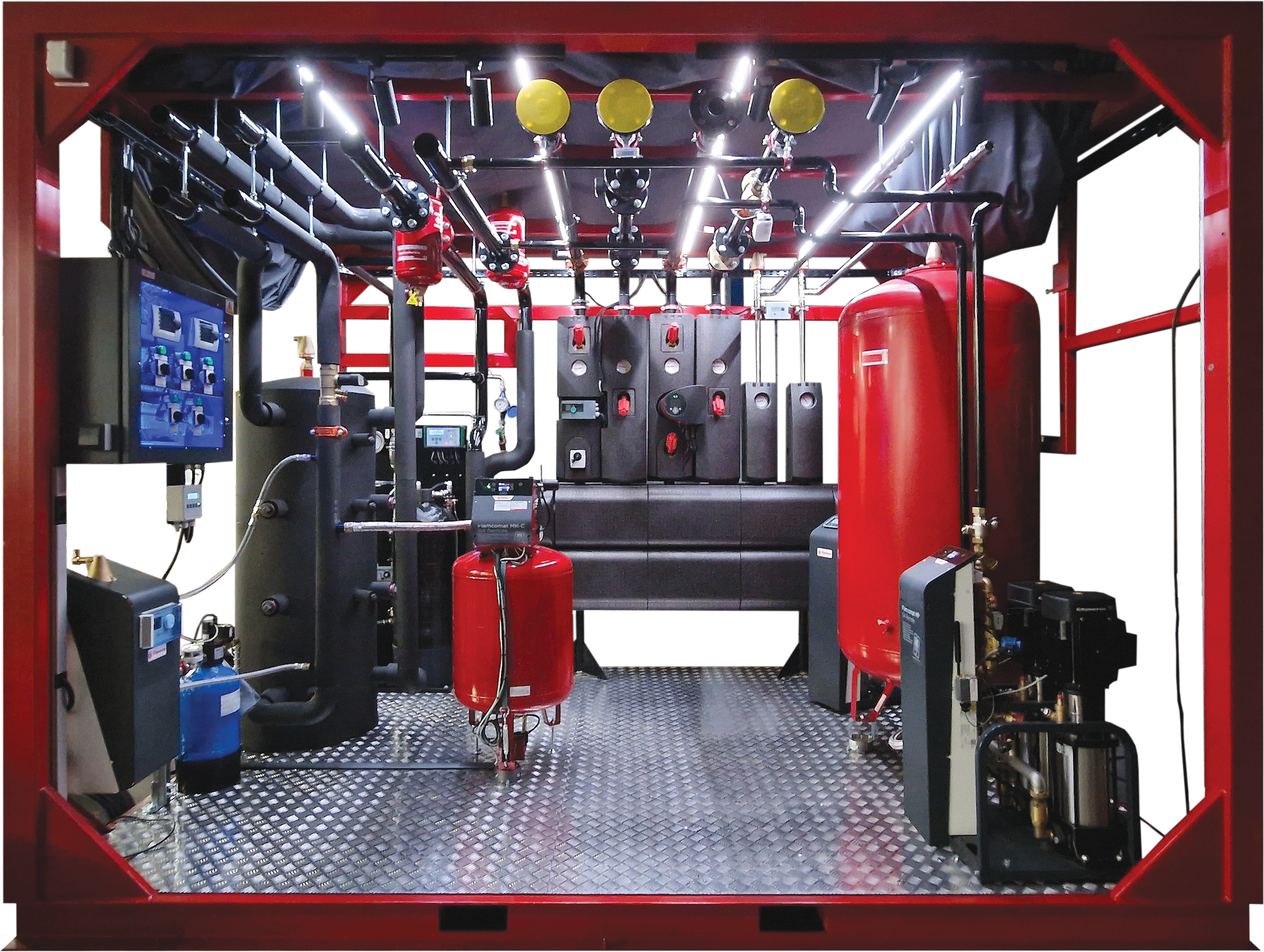
That is the thinking behind Aalberts' engineered piping systems, valves and prefabricated skid solutions. Entire hydronic systems, boiler room solutions, connection systems, core piping systems designed and assembled under controlled factory conditions, then delivered to site as engineered assemblies ready for integration. All that needs to be done is connect and commission. The complexity gets resolved before the unit ever leaves the factory. The team on site is not firefighting problems under pressure. They are completing a connection.
This approach helps accelerate installation timelines, reduce on-site complexity, and support uptime from day one.
The complexity gets resolved before the unit ever leaves the factory. The team on site just completes the connection.
Built to scale, built to last
Factory-built modules arrive with reliability already baked in. Every component is pre-tested. Every integration is pre-verified. And because these systems are modular, they scale. As digital demand grows, operators can add capacity without rebuilding from scratch. Less waste, more efficient use of materials, and better outcomes for the long run.
AI gets the headlines. But none of it runs on ideas alone. It runs on steel, pipes, cooling loops and engineering that most people will never think about. That's fine. That's how good infrastructure is supposed to work. Aalberts focuses on that less visible layer as an integrated systems partner for mission-critical infrastructure, helping reduce risk, accelerate delivery, and protect uptime in environments where failure is not an option.
Facts & figures
- Up to several weeks faster installation
- Large projects indicate potential savings of ~5–6 weeks vs. traditional on-site builds (experience-based)
- Faster, simpler commissioning
- Pre-tested, pre-set, plug-and-play systems significantly reduce commissioning time
Contact us if you want to know more about this article

Thijs van der Lugt
legal & governance